The first thing to know about Joy Bingo is the speed. Rounds resolve in seconds: thirty balls fired in a burst, twenty cards marked simultaneously, winnings settled and the Play button lit again before you’ve worked out what just happened. Nothing else in this section moves at half this pace, and Yellow Bat clearly know it, because the graphics stay simple and legible so the tempo never trips over decoration. It feels closer to an arcade cabinet than a bingo hall, and depending on your temperament that’s either the appeal or the warning.
A Wall of Twenty Cards
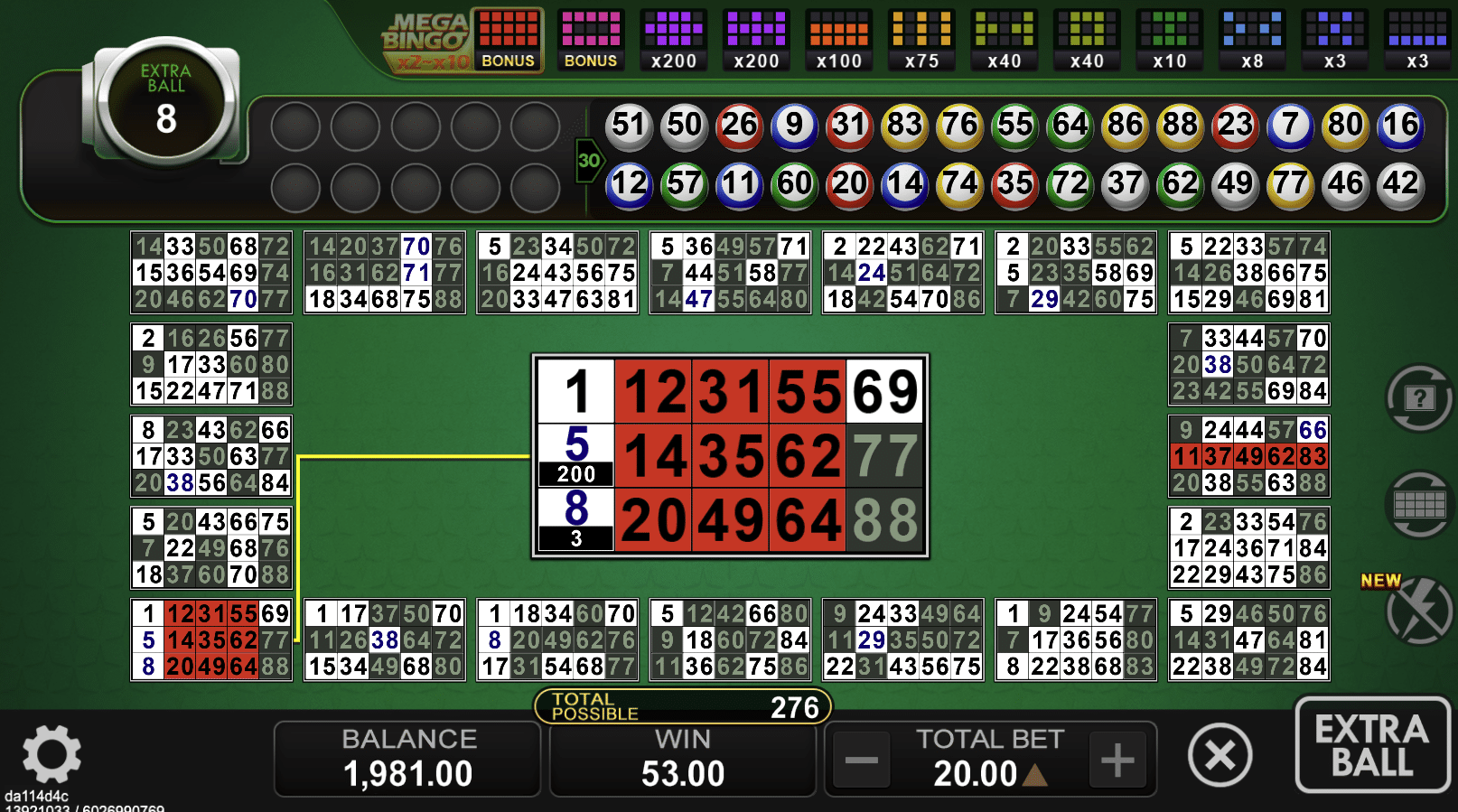
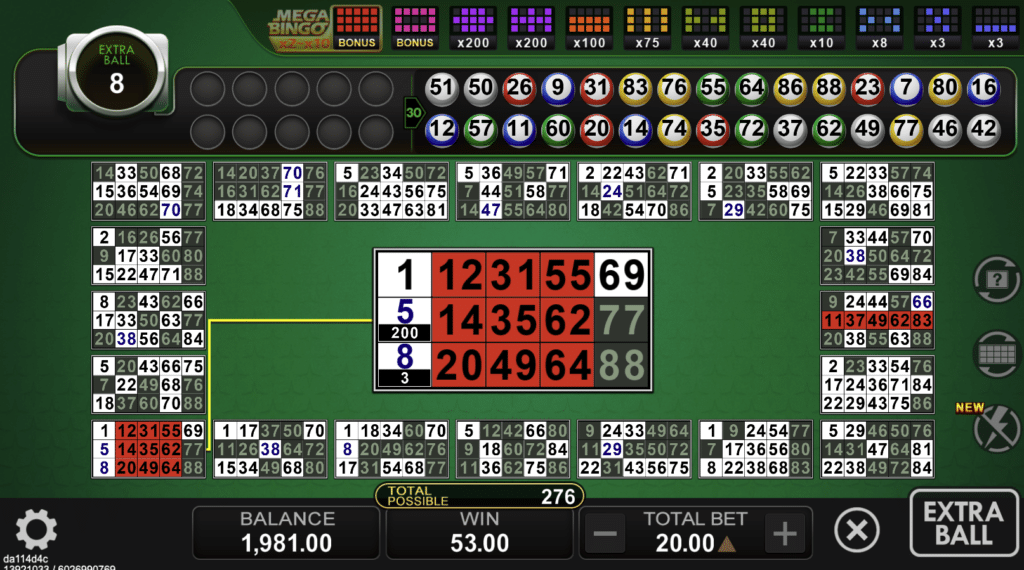
Twenty cards fill the screen by default, fifteen numbers apiece, and while a selector beside the grid drops that to four, six or nine, the game plainly wants you playing the lot. The stake is per card, so at the demo’s 1.00 floor the full board costs 20.00 a round and the smallest costs 4.00, the widest spread in this section by a distance.
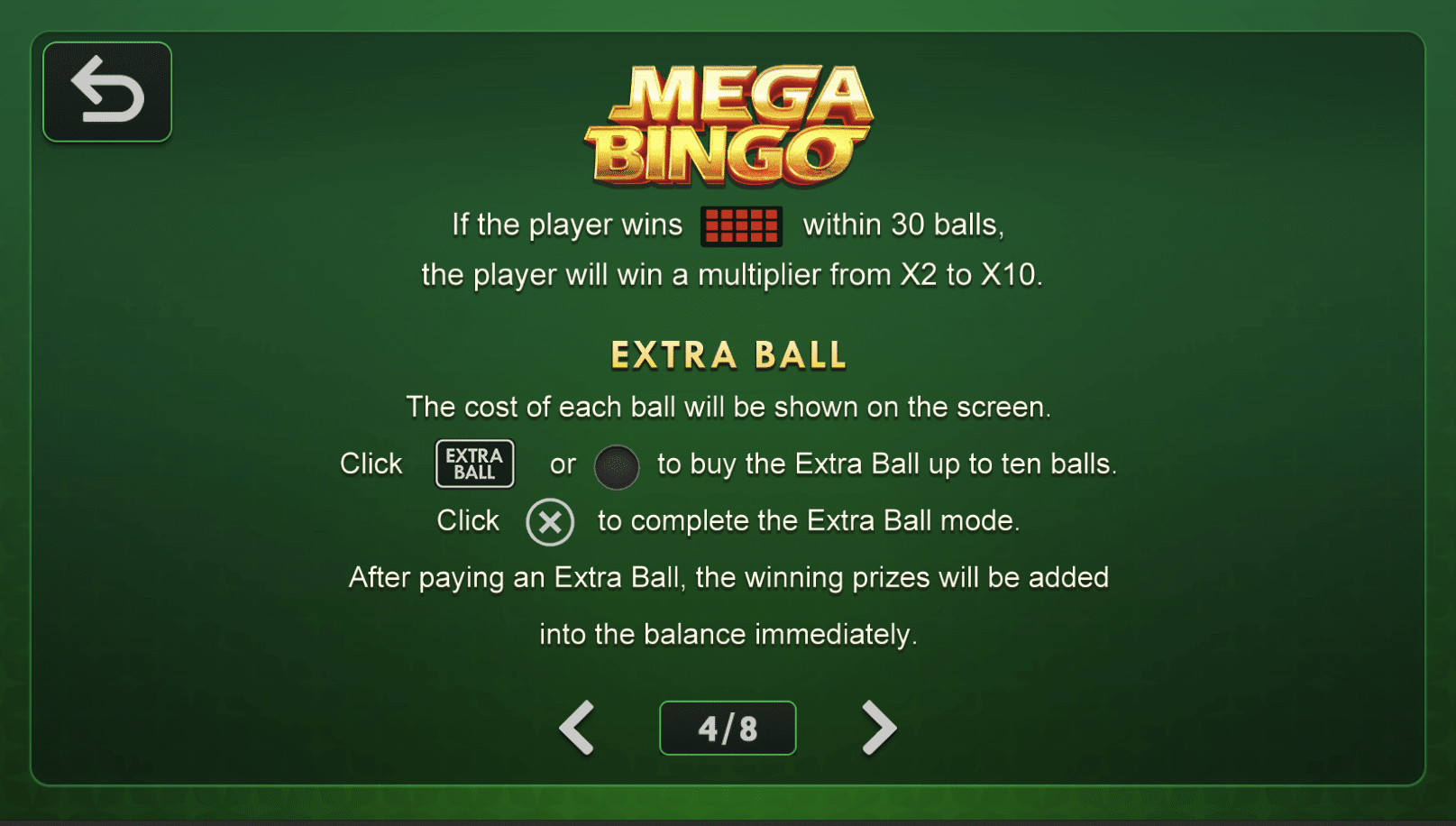
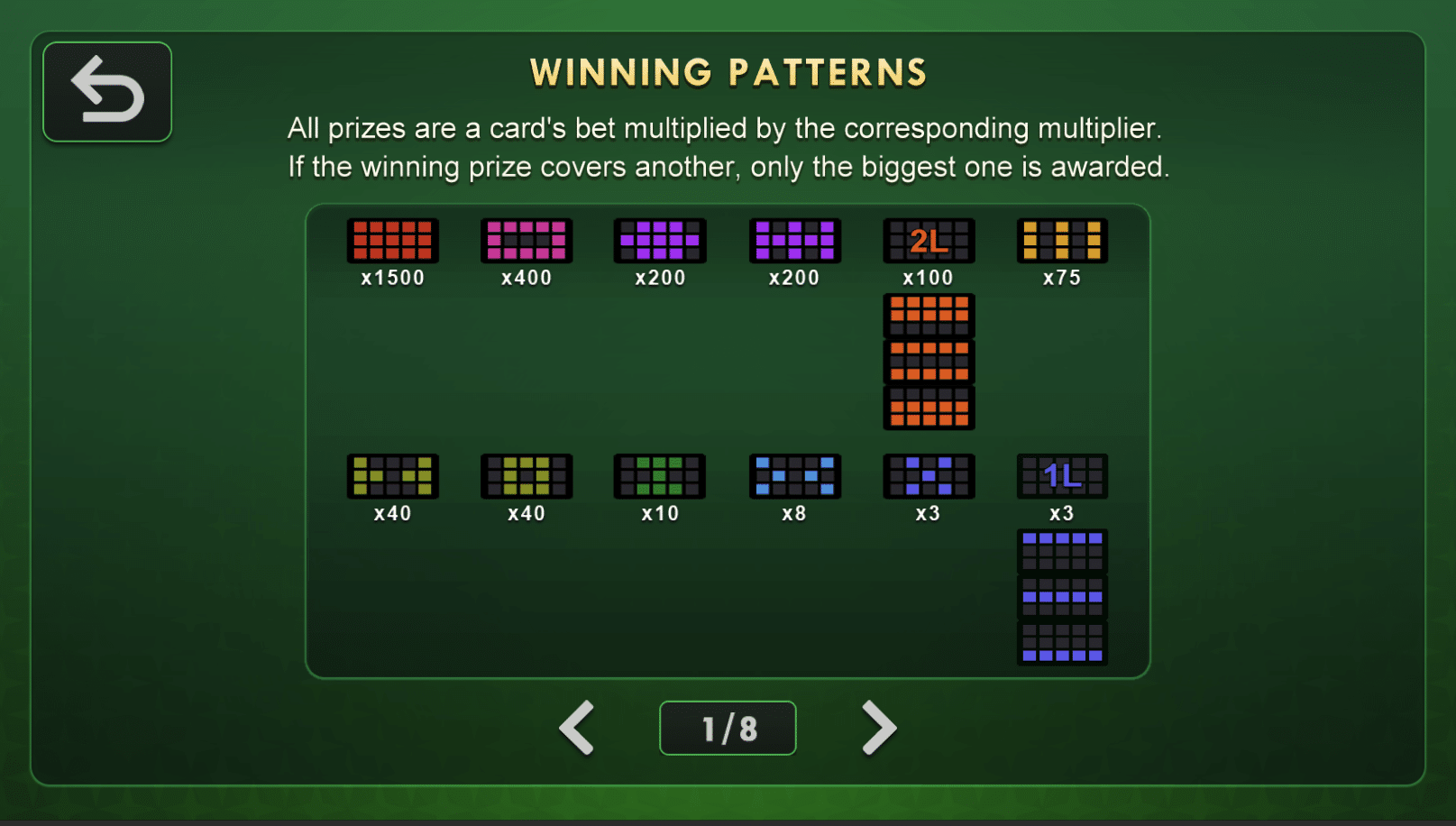
Reading nineteen flickering cards at once is impossible, which the game solves with a magnified focus card in the centre of the screen while the rest twinkle away around it. Prizes are pattern multipliers on a card’s bet, running from 3x for a single line to 1,500x for the full card, with only the biggest prize paying where patterns overlap. Fill the full card inside the thirty-ball draw and Mega Bingo lands a further x2 to x10 on top of it.
Near misses are handled well. Any square one ball short shows the prize it would complete, and a running total-possible counter keeps score of everything still in reach.
Extra Balls, Free Balls and the Wild Pick
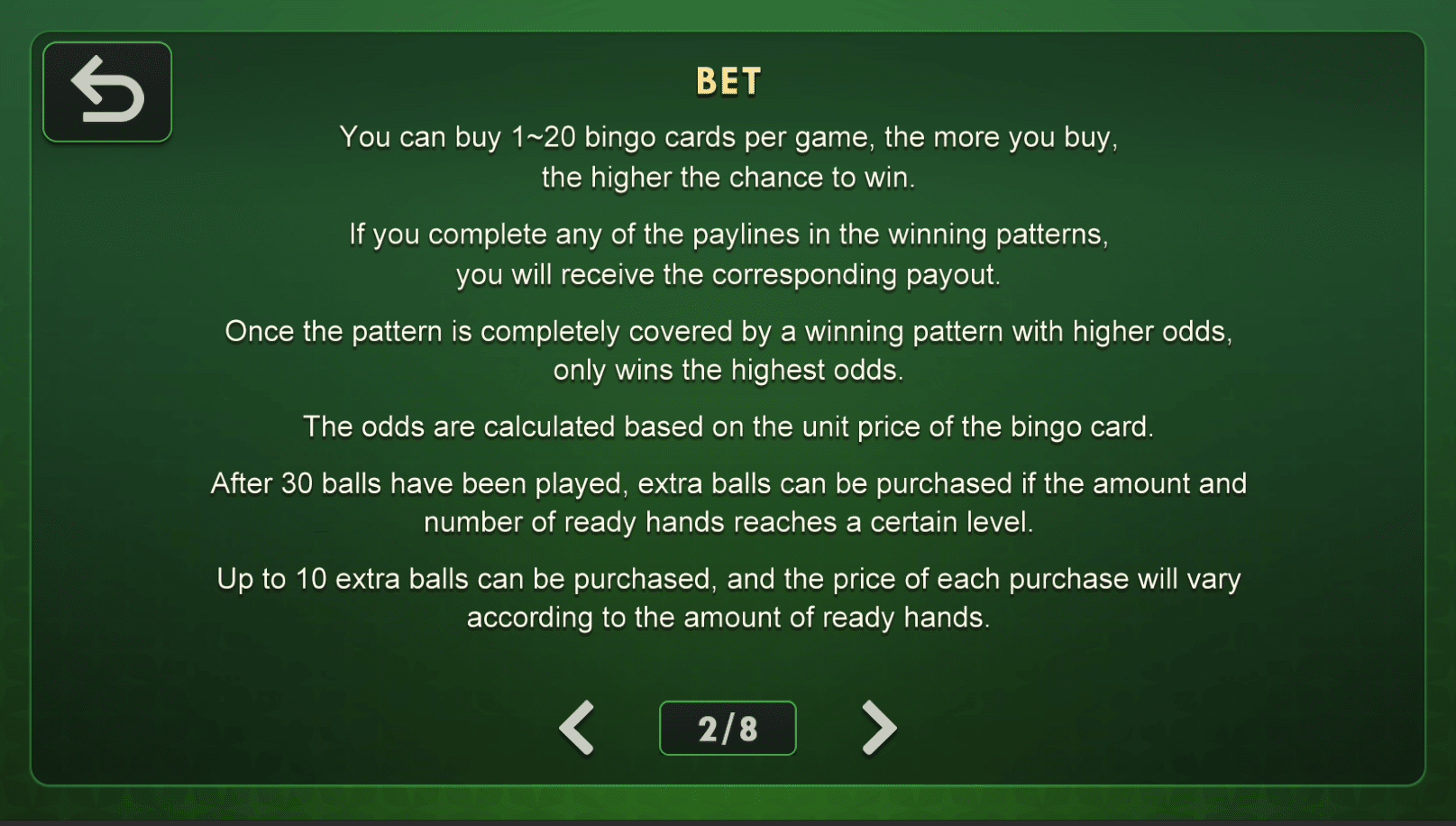
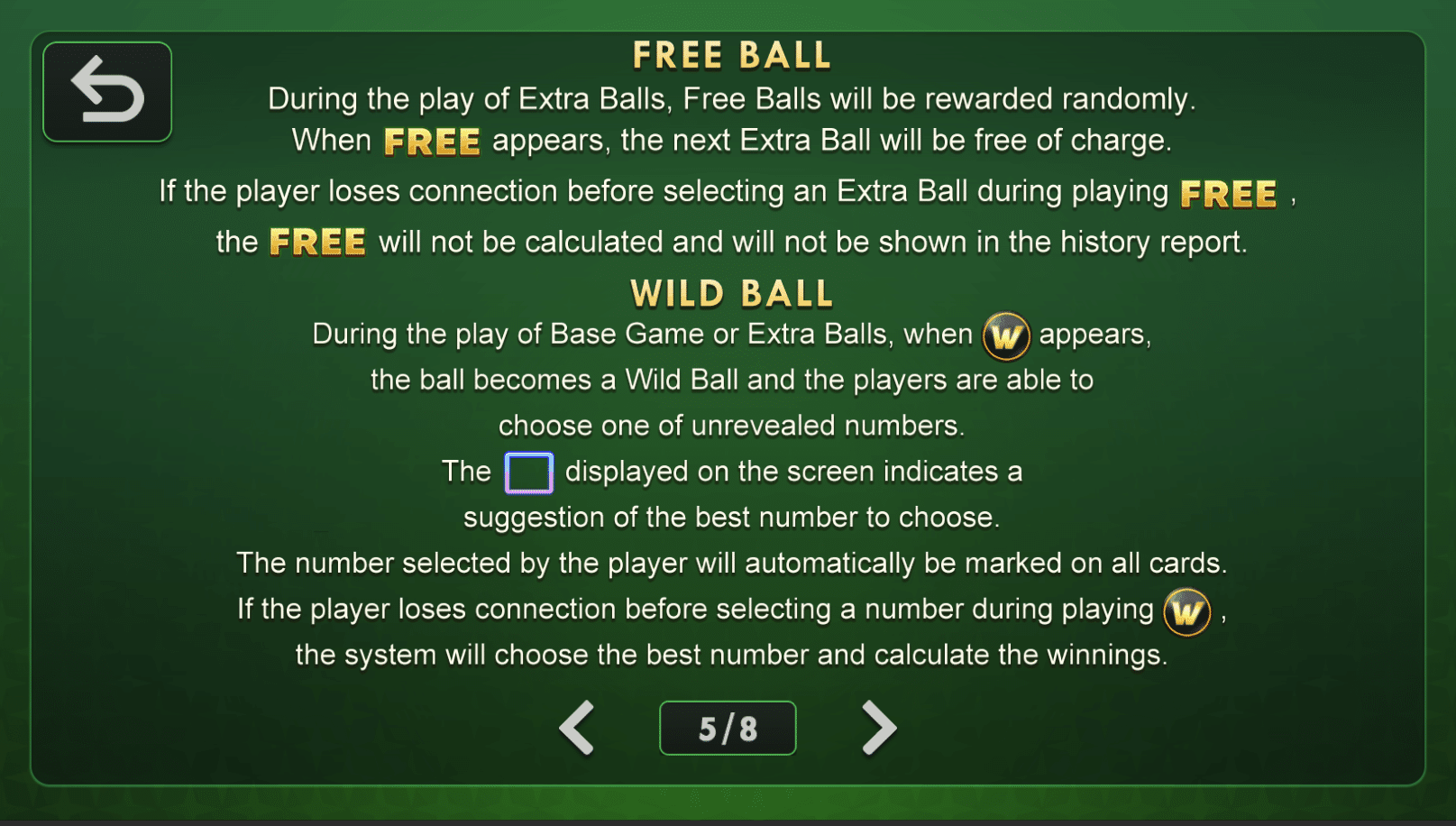
When the draw ends with prizes live, up to ten extra balls can be bought, each individually priced on screen, and anything they complete is banked immediately. Watch the buttons here: the big one sitting where Play used to be buys another ball, while cashing out is the small cross beside it. We clicked the wrong one more than once, and we’d be surprised if that layout were an accident. To the game’s credit, the settings include an option to switch extra-ball buying off altogether, which is a more honest safety valve than most demos offer. Two twists sweeten the mode. Free Balls appear at random and make your next purchase cost nothing, and the Wild Ball is the best idea in the game: a W rolls out, you choose any unrevealed number yourself, the game highlights the square it reckons is your best pick, and your choice is marked across all twenty cards at once.
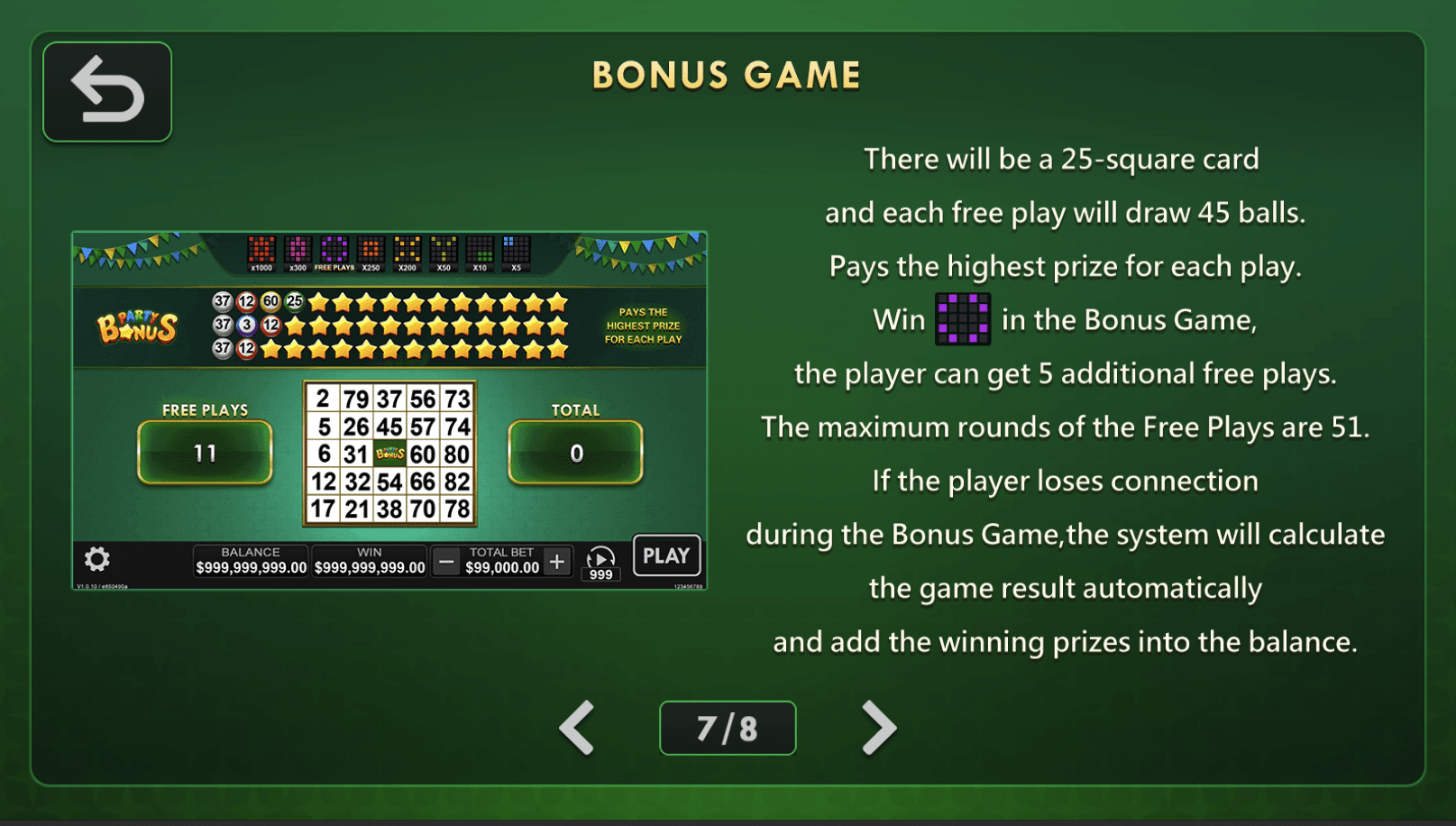
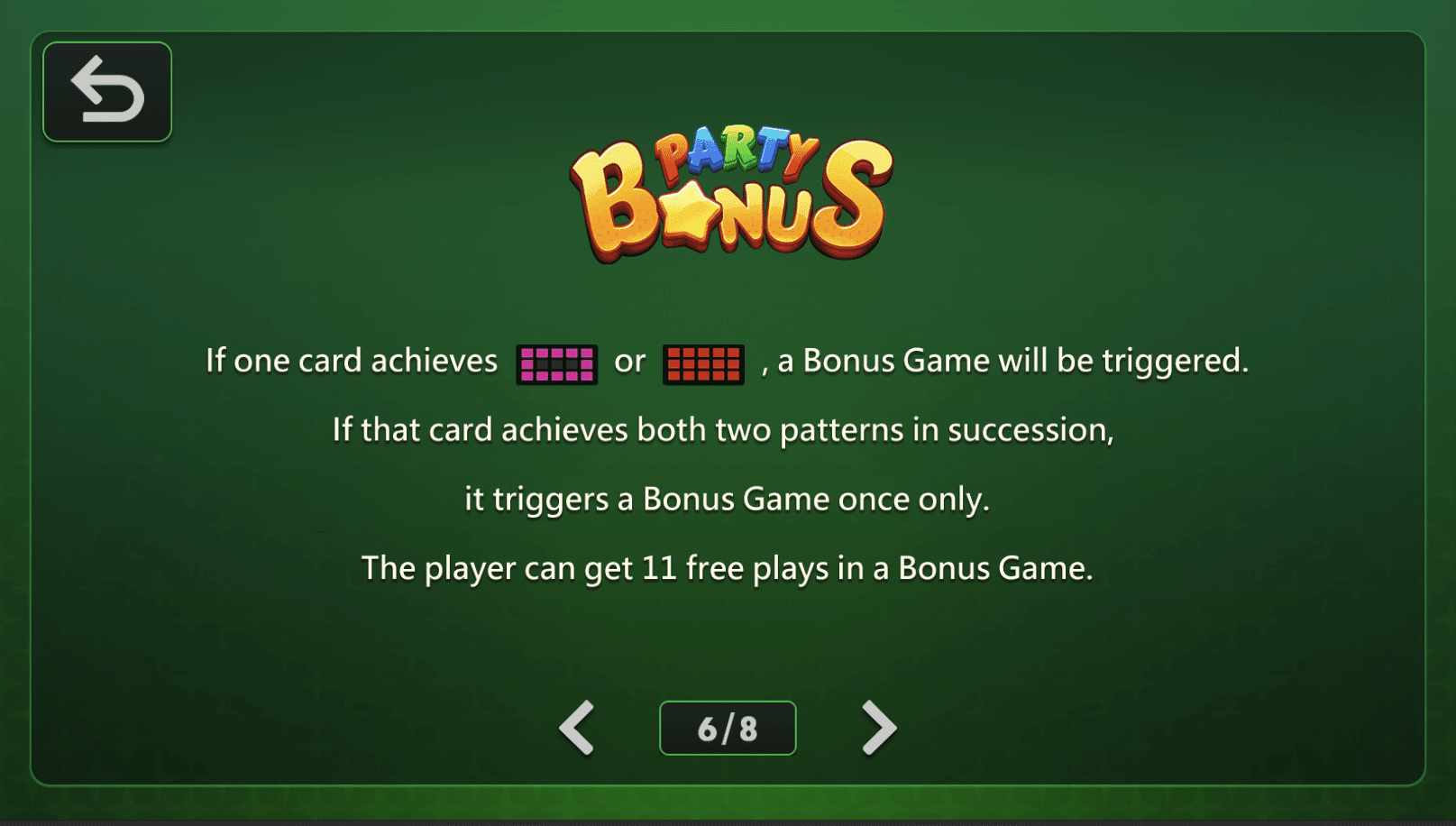
The pink pattern opens the Party Bonus, and it’s a proper second game rather than a token animation. You get a fresh 25-square card, every free play draws 45 balls and pays its best prize at up to 1,000x, and further free plays can be won along the way up to a cap of 51 rounds.
Our advice, and we’d give it even with demo credits: drop to four cards, set the minimum stake and stay there until the rhythm clicks. The rounds go by so quickly that a balance can evaporate while you’re still learning what the patterns pay, and the default 20.00 a round is not a gentle introduction. Get past that adjustment period and this is the most exhilarating thing in the section. Just make sure it’s you setting the tempo, not the game.